Флакон с дозатором для шампуня: подробный обзор инженерных решений и B2B-поставок в сфере косметической упаковки
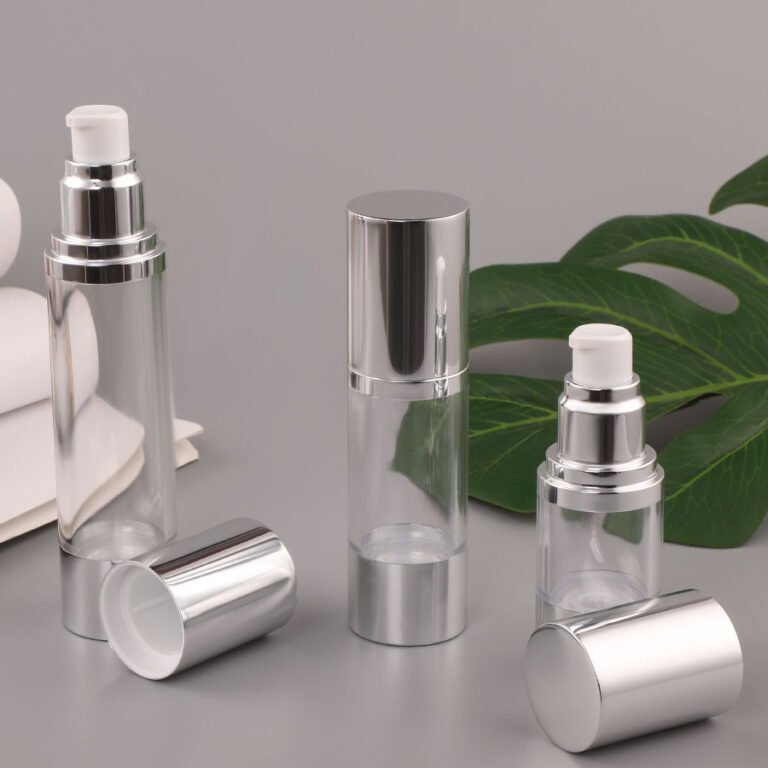
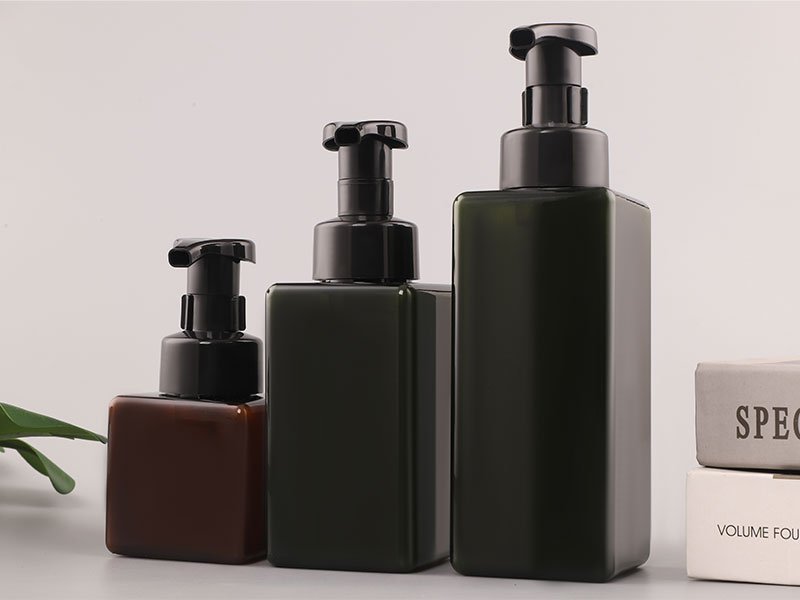
A флакон с дозатором для шампуня На прилавках магазинов она может казаться простой, однако на самом деле это тщательно спроектированная косметическая упаковка, собранная из десятков крошечных компонентов. Вся система состоит из двух основных частей: головки насоса и корпуса флакона. Для изготовления каждой из этих частей используются свои сырьевые материалы и специальные технологические процессы, что напрямую влияет на эффективность производства, безопасность транспортировки, впечатления конечных потребителей и репутацию бренда.
Когда пользователь нажимает на головку насоса, внутренний поршень сжимает возвратную пружину. Разница давлений воздуха проталкивает жидкость шампуня вверх через погружную трубку, обеспечивая контролируемую дозировку. Даже незначительные несоответствия в подборе компонентов могут привести к утечке, заклиниванию насоса или неполному выдавливанию жидкости.
1. Основные компоненты и характеристики материалов рабочего блока насоса
Насадка насоса является «механическим сердцем» флакона-дозатора для шампуня. Каждая внутренняя деталь должна соответствовать строгим стандартам химической стойкости и износостойкости, чтобы обеспечивать совместимость с различными составами средств по уходу за волосами.
| Название компонента | Общий материал | Характеристики материала |
|---|---|---|
| Привод насоса и корпус насоса | ПП (полипропилен) | Гладкая поверхность, устойчивость к трению, стабильные химические свойства, низкий риск химической реакции с компонентами шампуня |
| Погружная трубка | ПЭ / ПП | Хорошая гибкость, регулируемая длина реза, устойчивость к разрушению при многократных изгибах |
| Возвратная пружина | Нержавеющая сталь 304 / 316 | Высокая коррозионная стойкость, гарантирующая срок службы в тысячи циклов сжатия-отскока |
| Шарик одностороннего клапана | Стекло / Нержавеющая сталь | Высокая плотность, быстрое прилегание для герметизации канала и предотвращения обратного потока жидкости после сброса давления |
| Уплотнительная прокладка | Резина / ПЭНП | Физический герметизирующий барьер, предотвращающий утечку во время транспортировки после плотной закрутки горлышка бутылки |
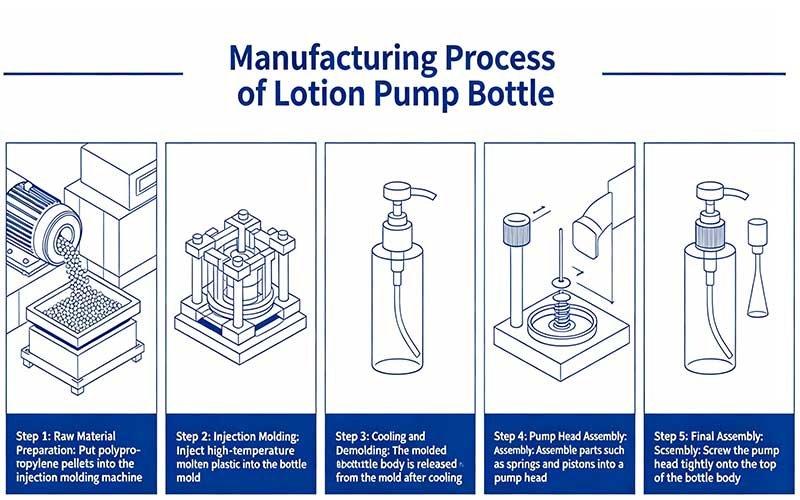
Основные этапы производства головок насосов включают литье под давлением, обработку металла и высокоскоростную автоматическую сборку. Пластиковые гранулы из полипропилена (PP) или полиэтилена (PE) нагреваются до 180–220 °C, под высоким давлением впрыскиваются в прецизионные формы, охлаждаются в течение 30–60 секунд и извлекаются из форм для получения пластиковых деталей, в том числе корпуса насоса и поршней. Внутренние пружины изготавливаются на прецизионных проволочно-намоточных станках; шарики клапанов проходят тщательную шлифовку и полировку для обеспечения высокой округлости, необходимой для надёжного уплотнения.
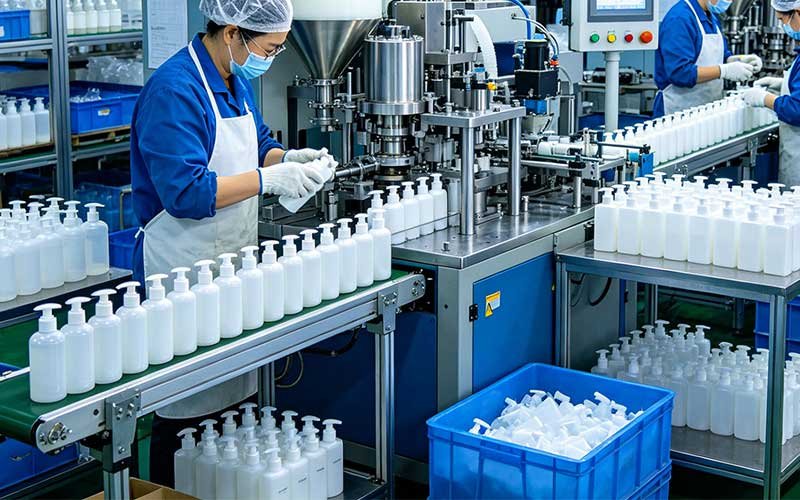
На современных заводах полный цикл сборки осуществляется на автоматизированных производственных линиях: резка и установка погружной трубки → сборка сердечника насоса → установка пружины и шарика клапана → прессование прокладки → фиксация головки насоса. На протяжении всего процесса проводится контроль с помощью систем машинного зрения для проверки точности сборки и герметичности.
2. Корпус бутылки: материал, производство и функциональные требования
При изготовлении корпуса бутылки особое внимание уделяется ударопрочности, барьерным свойствам (снижение потери воды и улетучивания аромата), а также превосходному внешнему виду, способствующему продвижению бренда. Для различных видов пластика применяются разные технологии формования.
| Сокращения названий материалов | Полное имя | Внешние и функциональные особенности | Типичный производственный процесс |
|---|---|---|---|
| ПЭТ | Полиэтилентерефталат | Высокая прозрачность, глянцевая поверхность, прочность и ударопрочность; широко используется для производства прозрачных шампуней | Литье с растяжением и выдувом |
| HDPE | Полиэтилен высокой плотности | Непрозрачный или полупрозрачный, приятный на ощупь, обладает превосходной химической стойкостью к коррозии | Экструзионно-выдувное формование |
| PP | Полипропилен | Полупрозрачный, термостойкий, подходит для обработки матовых поверхностей | Литье с растяжением и выдувом / экструзионное выдувное формование |
В производстве высококачественных прозрачных ПЭТ-флаконов для шампуня преобладает технология литья с растяжением и выдувом. Сначала из пластика методом литья под давлением изготавливаются трубчатые преформы с точной резьбой горлышка. Преформы повторно нагреваются до пластичного состояния и подаются в формы для выдува. Растягивающие стержни вытягивают преформы вниз, а воздух под высоким давлением раздувает пластик, прижимая его к стенкам полости формы. После охлаждения получаются готовые корпуса бутылок.
3. Практические рекомендации по поиску поставщиков в сегменте B2B для косметической упаковки
Для покупателей в сегменте B2B флакон с дозатором для шампуня — это гораздо больше, чем просто пластиковый корпус. Он влияет на совместимость с линиями розлива, частоту сбоев в логистике и отзывы потребителей. Даже незначительные отклонения в размерах или материалах могут привести к браку партии или значительным убыткам в послепродажном обслуживании. Ниже приведены основные рекомендации по закупке косметической упаковки.
3.1. Подтверждение важных технических характеристик и совместимости
Перед получением официального предложения согласуйте все параметры с поставщиком; несоответствие размера горлышка приведет к тому, что насос и бутылка будут непригодны для использования.
- – Отделка горловины: К стандартным международным размерам упаковки для шампуня относятся 24/410, 28/410, 33/410. Первая цифра обозначает внешний диаметр горлышка (мм), вторая — спецификацию резьбы. Горлышко насадки-дозатора должно идеально соответствовать горлышку бутылки.
- – Дозировка на выходе насоса: Для шампуня обычно используется объем 1,5–4,0 см³ за одно нажатие. Для шампуня с высокой вязкостью следует выбрать объем подачи ≥2,5 см³, чтобы конечным пользователям не приходилось сильно нажимать на дозатор.
- – Длина погружной трубки: Изготавливается по индивидуальному заказу с учётом конечной высоты бутылки. Оптимизированная конструкция позволяет кончику трубки слегка изгибаться и касаться нижнего края бутылки, что обеспечивает максимальное опорожнение жидкости и сокращает количество остаточных отходов.
3.2. Обязательные испытания по обеспечению качества
Не стоит оценивать косметическую упаковку только по внешнему виду и цене за единицу. Невидимые характеристики определяют её конкурентоспособность на рынке. Перед утверждением серийного производства запрашивайте протоколы испытаний или проводите собственную проверку.
- 1. Тест на совместимость составов: Разлейте готовый шампунь по пробным флаконам и храните в течение 1–3 месяцев при температуре до 45 °C, как при высоких, так и при низких температурах. Компоненты, направленные на борьбу с перхотью, или эфирные масла могут привести к хрупкости пластика, его деформации, ржавлению внутренних пружин или заклиниванию насоса в случае использования упаковки низкого качества.
- 2. Вакуумная проверка герметичности: Проведите испытания собранных узлов в условиях отрицательного давления, чтобы избежать переполнения, вызванного изменением давления воздуха во время авиаперевозки и на неровных участках пути.
- 3. Испытание на усталостную прочность: Головки насосов, соответствующие требованиям, должны выдерживать более 3000 циклов сжатия-отскока. Получите официальные данные об испытаниях на усталостную прочность у вашего поставщика.
3.3. Стратегия отбора проб и вопросы, связанные с цепочкой поставок
Понять логику заводского производства, чтобы найти баланс между минимальным объемом заказа (MOQ), индивидуальными требованиями, стоимостью и сроками изготовления.
- – Минимальный объем заказа и индивидуальный цвет: Для стандартных прозрачных, белых и чёрных ПЭТ-бутылок и насадок-дозаторов минимальный объём заказа (MOQ) обычно составляет около 5 000 штук. При использовании нестандартных цветов по шкале Pantone, а также матовой или перламутровой отделки минимальный объём заказа (MOQ) обычно увеличивается до 8 000–50 000 штук или более.
- – Предсерийный образец (PPS): Перед внесением аванса за серийное производство закажите полностью собранные предсерийные образцы с подтвержденной длиной погружной трубки и цветом. Проведите пробные испытания на вашей оригинальной линии розлива, чтобы убедиться в совместимости с укупорочной машиной и определить подходящий момент затяжки.
- – Комплект из отдельных компонентов или готовый комплект: Головки насосов и корпуса бутылок зачастую изготавливаются на различном специализированном оборудовании. Крупные покупатели могут закупать насосы и бутылки отдельно в целях оптимизации затрат. Средним и мелким покупателям рекомендуется выбирать поставщиков, предлагающих комплектную косметическую упаковку, которые берут на себя полную ответственность за совместимость резьбы горлышка и герметичность.
4. Итог
Выбор подходящего флакона с дозатором для шампуня — это не только вопрос эстетики, но и комплексная оценка, охватывающая такие аспекты, как материаловедение, производственные возможности, контроль качества и управление рисками в цепочке поставок. Вложение времени в согласование технических требований, проверку образцов и тестирование эксплуатационных характеристик косметической упаковки позволяет избежать дорогостоящих сбоев при заказе партий продукции и обеспечить стабильное качество обслуживания потребителей вашего бренда средств по уходу за волосами.
Нинбо Alever Наша компания специализируется на разработке и производстве упаковочных материалов для косметики. Наша продукция широко используется в косметической, садоводческой, средствах личной гигиены, средствах ухода за домом, пищевой и других отраслях; кроме того, наша компания обладает правом на импорт и экспорт. Свяжитесь с нами чтобы выбрать вариант косметической упаковки, который наилучшим образом соответствует вашим потребностям!